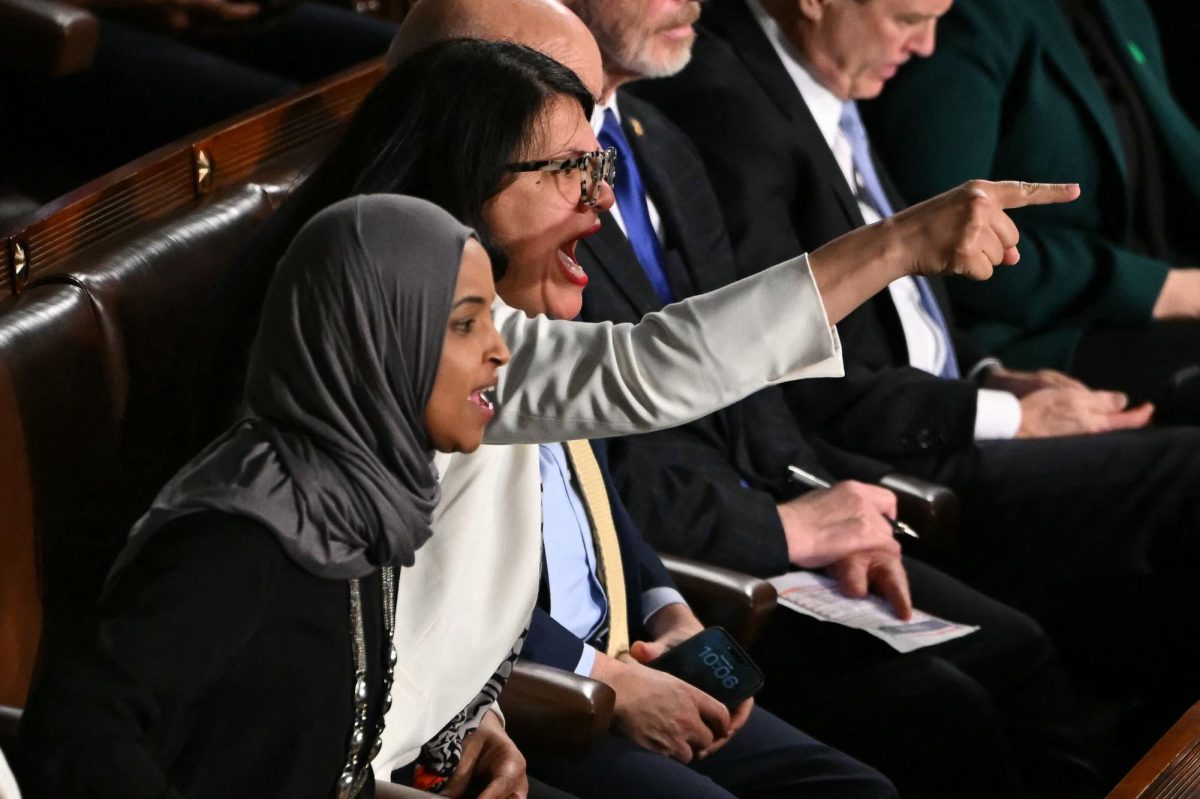
“There is no truth. There is only perception.” When French novelist Gustave Flaubert wrote these words, he was referring to the subjective nature of how one recounts and recollects events. When it comes to politics, these words certainly stand true. Which side is “right” or “wrong” depends on what we emphasize, what we leave out (whether purposefully or accidentally) and our own biases and prejudices. Yet often in Cambridge, only the liberal side is portrayed as “right.” CRLS sometimes feels like an echo chamber for political opinions, and people often automatically assume the worst of anyone whose opinions differ from the majority.
In Cambridge, support for the Democrats is immensely widespread. I myself support the Democrats, but am concerned by the fact that people in my position almost solely encounter those with their own beliefs. In a survey of 100 CRLS students, about 70% of all participants stated that they aligned themselves with the Democrats, an absolute majority. Such a homogenous worldview is not inherently negative—for instance, it allows for a society united in its political beliefs. However, this leads to a lack of variety in perspectives, and if everyone around us tells us we’re right all the time, then we’re going to believe we’re objectively in the right as well.
In the case of Cambridge, anyone who strays from the political majority tends to face an uphill battle; when one belief is overwhelmingly considered correct, other ideas are scorned and considered objectively wrong.
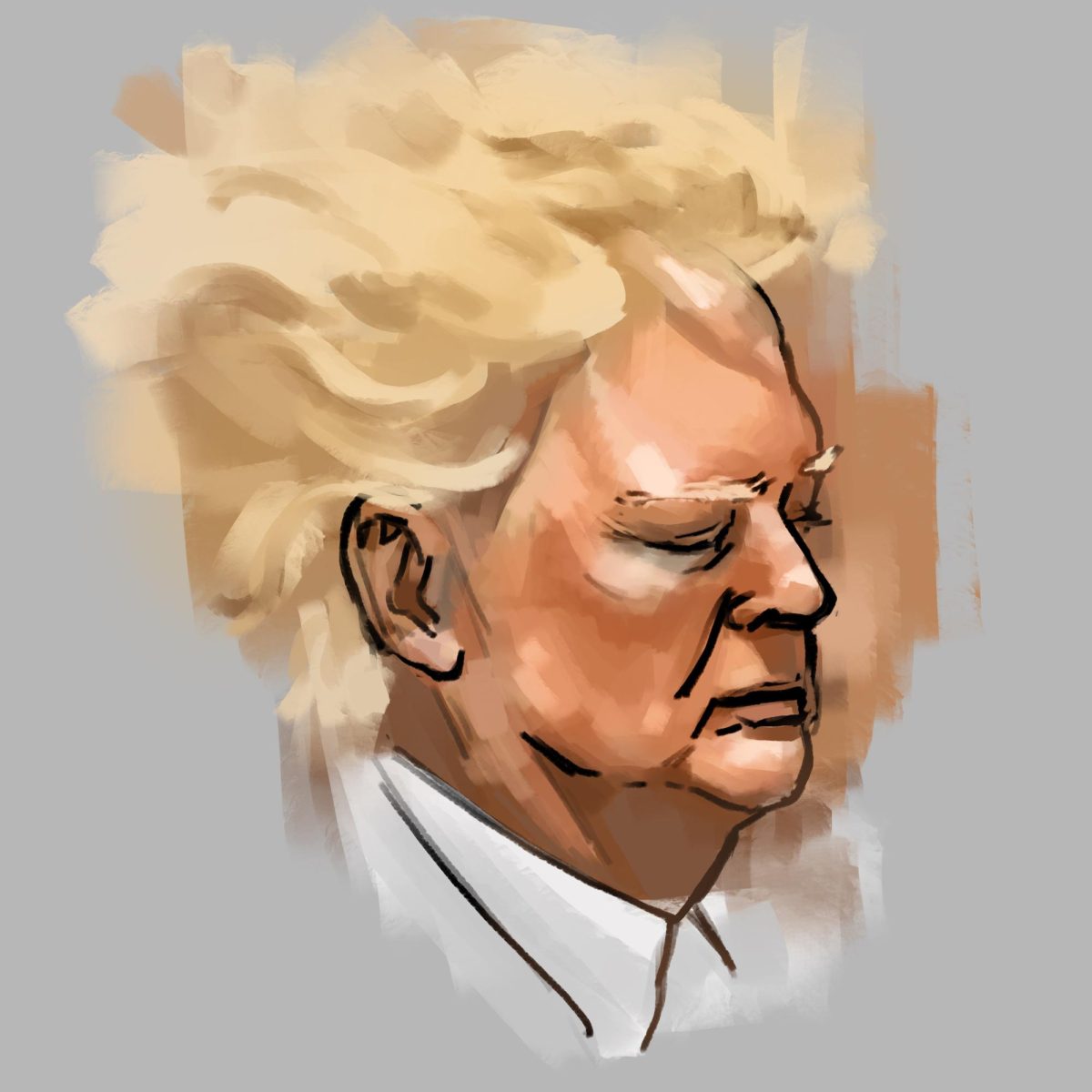
Believing an entire political stance to be objectively wrong often leads to blanket statements about those who carry such beliefs. For instance, how would you react right now if a friend of yours told you that they would have voted for Trump? According to the CRLS survey, 60% of responders stated that they’d be very upset if a close friend of theirs said they supported Trump. In a later question asking why people think Trump won the election, 61% of those asked stated that they think the majority of the population is uneducated/lacks media literacy, with 37% believing the majority of the population is racist, sexist, transphobic, or xenophobic. In other words, if one votes for Trump, it is often assumed that they are discriminatory, or at the very least, stupid.
While it may be true in some scenarios that those who voted for Trump are indeed racist, xenophobic, or uneducated, assuming that this applies to all is a sweeping generalization and fails to account for other possible reasons behind why someone would vote for Trump. One of these possibilities is the Abraham Accords; according to the American Jewish Committee, this Trump policy normalizing relations between Israel and Arab nations is “providing new opportunities for direct flights, people-to-people exchanges, business partnerships, and … investment and growth in the area.” Another factor is Trump’s new drug policy. According to the Department of Homeland Security, there has been a 59% increase in fentanyl seizures. Furthermore, Trump may have sold someone on possible economic benefits–especially surrounding the working-class voters. In a survey conducted by Pew Research Center, 93% of Trump voters stated that the economy was a very important deciding factor for their vote. Or perhaps his promise to put an end to the oppressive Maduro and Iranian regimes has garnered support. Any of these factors may have led to an individual voting for Trump if they believed the positives outweighed the negatives, or that Harris would be even worse. While I personally would not have voted for him, it’s vital to acknowledge that one cannot immediately know the motivations behind another’s vote.
Of course, some of those who voted for Trump may very well be racist, or transphobic; there is no doubt that a degree of racism is involved when one looks at the ICE policy Trump has enacted. And if someone actually carries racist views, then they have forfeited their right to be heard out. However, assuming everyone who supports a certain political party falls into this category is an immense blanket statement that ostracizes an entire differing perspective. If one encounters someone with differing political beliefs from one’s own, one ought to have a conversation with them, and listen to their reasoning for carrying those beliefs. Whether someone is racist, for instance, ought to be judged on a case-by-case basis based on someone’s actual views and actions, rather than assuming the worst for everyone who voted for Trump.
Trump is not the only example of differing viewpoints needing to coexist to allow for an open and nuanced society. This same need for open-mindedness exists in many regards, and is not idealistic or impossible; it has worked before. Two students, Winifred Margaret Green ’29 and Mali DeAngelis ’29, recently reported having a debate about gun rights. Both had substantially different opinions, yet they didn’t judge one another, instead opting to hear the other out in spite of their disagreement. When asked about this debate later on, Mali stated that Winifred was “open-minded and respectful, even if we have different views,” and that she was therefore “not judging [Winifred] for her opinions.” It is possible to have a civilized and respectful discussion with someone, even if one disagrees with them.
Yet if this open-mindedness does not exist, if one cannot engage in an open discussion due to the immense negative connotations surrounding certain political groups, students will be hesitant to share their opinions. The CRLS survey found that 20% of students feel they can’t speak freely, or else feel pressured to agree with their friends about things they normally wouldn’t concur with.
Many say Cambridge’s greatest strength is opportunity, diversity, and respect. Yet is it really opportunity if a fifth of students believe they can’t speak freely? Does diversity really exist if only one opinion is ever considered true? Do we really respect each other if someone is assumed to be uneducated for carrying a different opinion?
“There is no truth. There is only perception.” When French novelist Gustave Flaubert wrote these words, he was referring to the subjective nature of how one recounts and recollects events. So acknowledge that your perception of reality does not carry all the truth. Give others the opportunity to freely express their ideas, so long as they are not actively spewing hate speech. Allow for diversity of opinions to remain. And respect their political beliefs, even if they differ from your own.
This article also appears in our April 2026 print edition.