CRLS administrators, teachers, and deans have developed and rebuilt our underclassmen humanities curriculum as a specific set of courses that help prepare students for their upperclassmen years. Their aim is to build students into stronger writers, critical thinkers, and thoughtful communicators.
To understand how students perceive the humanities—specifically within the underclassmen curriculum—I conducted a 56-student survey that asked CRLS students to reflect on their experiences in English and history classes. The variability of the humanities is reflected among responses; when asked to rate their underclassmen humanities classes out of five, 37.5% of respondents chose a neutral three.
I sought out Ms. Susie VanBlaricum, the Dean of History and Social Sciences for LC R, and a firm believer in the importance of humanities. She emphasized that humanities are the backbone of everything that humans do: “Even if I’m a computer programmer, what and who am I programming for? A software engineer builds software to make human lives easier.”
For many, these early classes are transformative. Dorothea Holman ’27 highlighted Mr. Flaherty’s class to the Register Forum, emphasizing how much excitement it brought her: “He was so engaging, and he genuinely loved what he was teaching.” She cites Mr. Flaherty’s genuine interest in his students as what motivated her to take AP World History.
Justin Kragten ’29 appreciated how Mr. Flaherty’s class challenges the narratives he has previously learned, telling the RF, “It’s refreshing, because I’ve usually only been taught America’s point of view of history. [Mr. Flaherty] is critical of all sides.” Many teachers at CRLS mirror Mr. Flaherty’s methods, using a similarly critical and personalized approach.
Elijah Bartholomew ’26, who feels he has excelled in the humanities, opted to take the year-long AP United States History class in his sophomore year. However, he felt discouraged from taking the class by his freshman history teacher, who didn’t think the AP curriculum followed a “good model.” AP-brand history classes rely heavily on memorization, due to the vast amount of content teachers are required to cover in a short period of time. But, as Ms. VanBlaricum pointed out to the RF, students need to truly understand the content in order to emerge with skills like argumentation, essay writing, and evidence analysis.
On the student survey, 45% of respondents rated the content they learned in humanities classes as a four or above in terms of usefulness and relevance. And similar to my love for humanities, Ms. VanBlaricum loves the history and social studies programs at CRLS because they cover such a wide range of topics. In her own words, “There is something for everybody.”
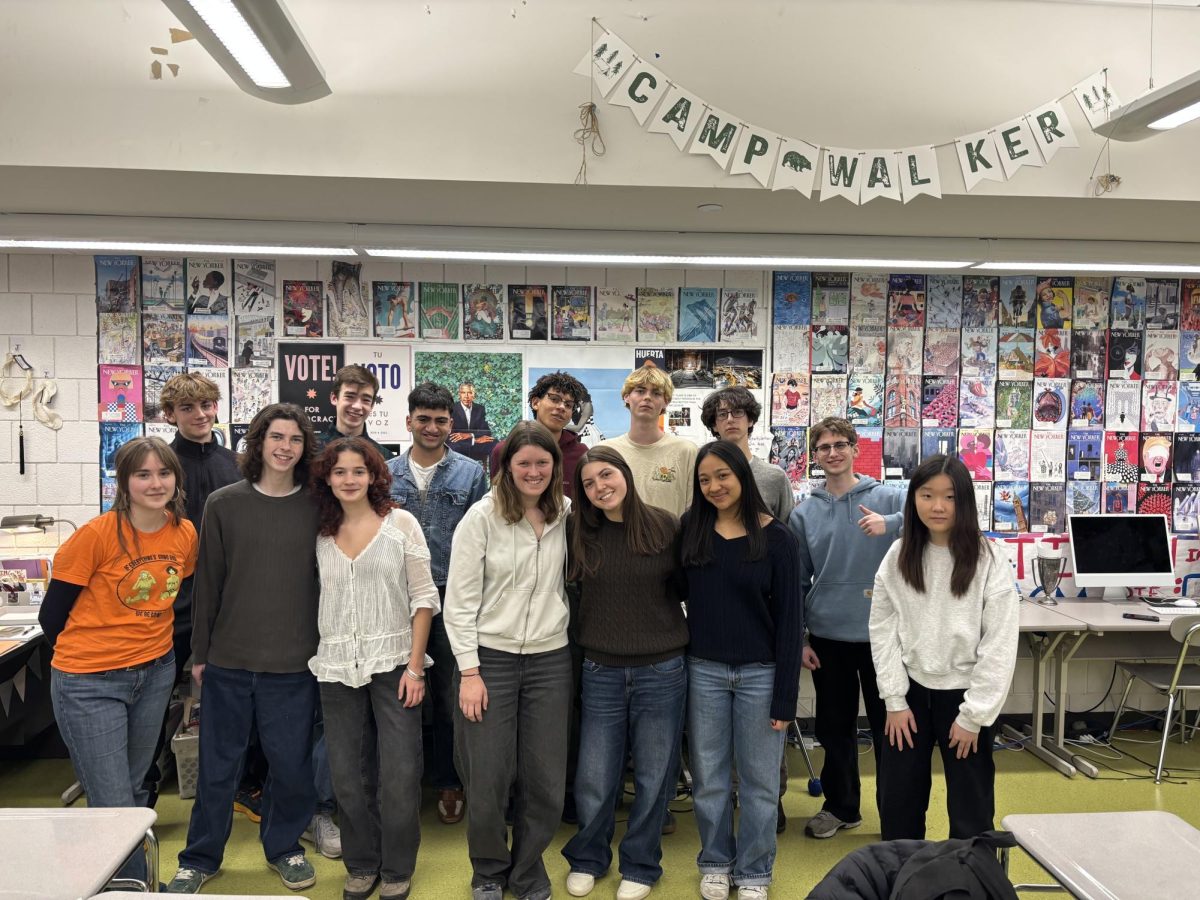
In Mr. Kreuser, Ms. Kabongo, and Mr. Montgomery’s co-taught Level Up Class, I witnessed how teachers have the power to channel student energy into class engagement. By using interactive games like Taboo, this teaching triad goes beyond surface-level facts to foster critical thinking and a “why” centered approach to history.
This matter extends across the CRLS humanities department. Students praised teachers like Mr. Cohen, Ms. Otty, Mr. Landwehr, and Ms. Read for their high-energy encouragement of criticism and adaptability.
These didactic strategies are vital; 40% of students report that a teacher’s personality is the primary driver of their enjoyment of humanities. Ultimately, early experiences carry lots of weight, with 46% of students stating that their underclassmen humanities teachers directly influenced the advanced courses they chose to pursue in their upperclassmen years.
Bartholomew noted to the RF, “The biggest thing I got out of those classes was social education—learning how to be around people I’ve never met before.” When he talked to his friends who were in other classes, he learned, “Every teacher was doing something different. I don’t even know what the standard was for those classes.” Elijah brings up a good point: when you have courses like underclassmen humanities—where there isn’t one singular teacher or consistent curriculum—you are bound to run into students who are learning different things and emerging with differing views on humanities.
Some students acknowledge this inconsistency while still valuing flexibility in the curriculum. Andrew Morland ’29 explained to the RF that “if missing a specific foundation or concept hurts you later, then it should be standardized. Otherwise, for world history specifically, you can go a lot of different directions and it stays interesting.”
While teachers play a large role in shaping students’ experiences in positive ways, concerns of structural inequities that affect class culture, individual student self-confidence, and content retention are impossible to ignore. The Level Up system—implemented in the 2017 school year for English, then for history the following year—sought to address these issues. It’s designed to move away from traditional tracking models in ninth-grade humanities that separate students into honors and college-prepatory (CP) tracks; all students now share access to common material, expectations, and year-long English and History courses taught in the aforementioned co-teaching style. Particularly, it aims to connect students with the vast number of humanities courses available at CRLS.
Mr. Kreuser further explained to the RF why Level Up was put in place. He reflected on his earlier years at CRLS while addressing issues with the old system: “Before [Level Up], I had my CP class do some of the work we did in my honors class the previous semester; and immediately, without even looking at the work, they said ‘we can’t do this.’ They internalized that the work was impossible because the word ‘honors’ was on it.” He concluded that, “The perceptions of self and of others—especially in ninth grade—were not okay. The word ‘honors’ created internalized ideas about who belonged where.”
Finally, Mr. Kreuser relayed how it’s his job as a teacher to create an environment where students feel comfortable to take risks, socially and academically. He emphasized how, at the end of each year, “it’s a very beautiful thing, the growth we see from kids; not only with progress in the classroom, but progress as thinkers, partners in learning, and members of a community.”