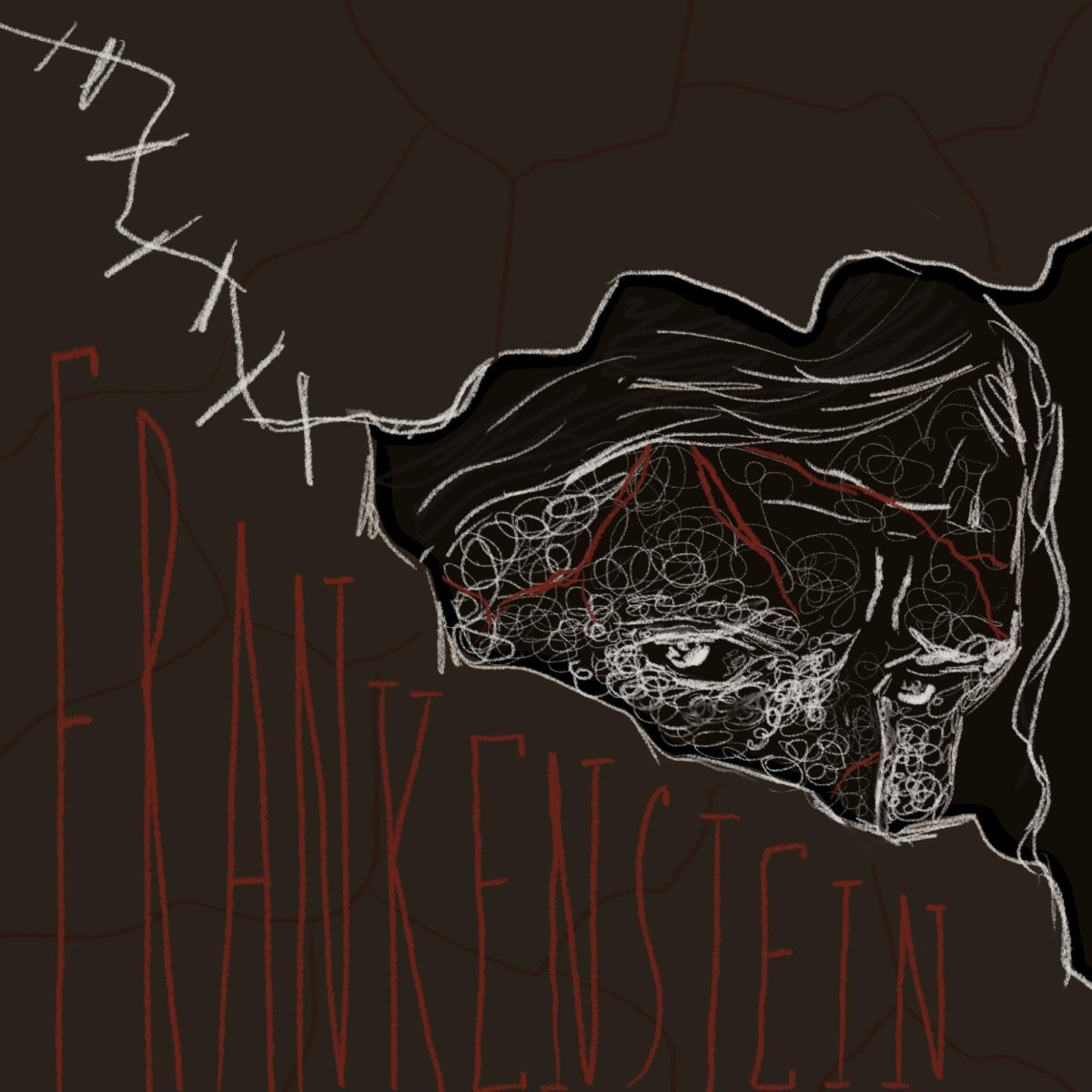
Directed by Guillermo del Toro and starring Jacob Elordi, this year’s “Frankenstein” is the newest film adaptation of Mary Shelley’s original novel written in 1819. As faithful editors of the Register Forum, we sat down to watch and review this new rendition of “Frankenstein” in order to answer: is it worth the watch?
For those unfamiliar with the plot of Shelley’s original book, “Frankenstein” centers around Victor Frankenstein, who makes a creature to quench his ambitions and conquer death. However, Victor finds himself repulsed and terrified, quickly abandoning his creature. The book ends in a tragedy, where Victor refuses to acknowledge or empathize with the creature, while the creature hunts down his loved ones as revenge.
Toro’s “Frankenstein” follows the book’s important plot details with a couple of major tweaks to the storyline. Namely, Toro decided to shift away from the original book’s themes about Victor’s privilege and irresponsibility and focused on the cruelty of humans—found in his criticism of Victor. In the book, Victor had a happy, rich childhood with loving, supportive parents. Victor’s moral faults are portrayed a lot more ambiguously because he’s an unreliable narrator. In the movie, however, Victor has an unhappy childhood with a cold and abusive father, which leads him to become cruel and vicious towards his own creation. The change in his backstory provides a clearer rationale for why Victor fails to raise the creation, but in doing so it sacrifices a more complicated and morally gray story.
Additionally, the pacing of the movie was too slow in some parts, while other scenes and characters felt underdeveloped. Elizabeth’s reason for loving the monster felt especially lacking. Towards the end, she attempts to hastily explain to the creature why she empathized with him so much, but her dying spiel about the nature of love and humans didn’t help fix the abrupt feeling of the scene.
On the other hand, the bits about the cabin and Victor’s making of the creature could’ve been cut down. Victor’s assistant dies before the birth of the creature, but his death doesn’t really serve a narrative purpose because there’s not much of a reaction from the characters. We already see Victor’s cruelty and downspiral after the creature’s birth, so the assistant’s death didn’t add anything to the plot beyond chaos. The movie is more than 2 hours long, and because of the lack of balance in pacing, the whole thing dragged on and came across as disjointed.
However, the movie does a good job in conveying the emotional impact of the story line. It felt easy to empathize with the creature, and Elordi’s delivery was spot on and painful. Toro’s attention to the visuals and aesthetics was another highlight of the movie. The dark, blue shadows contrasted with golden lighting gave the movie a very fitting, melancholic mood.
Del Toro’s “Frankenstein” is a uniquely visualized version of the story. If you’re a fan of gothic aesthetics and enjoy drama, Del Toro’s “Frankenstein” is worth a watch. But beyond delivering Del Toro’s vision, “Frankenstein” comes up a bit short.
This article also appears in our December 2025 print edition.