


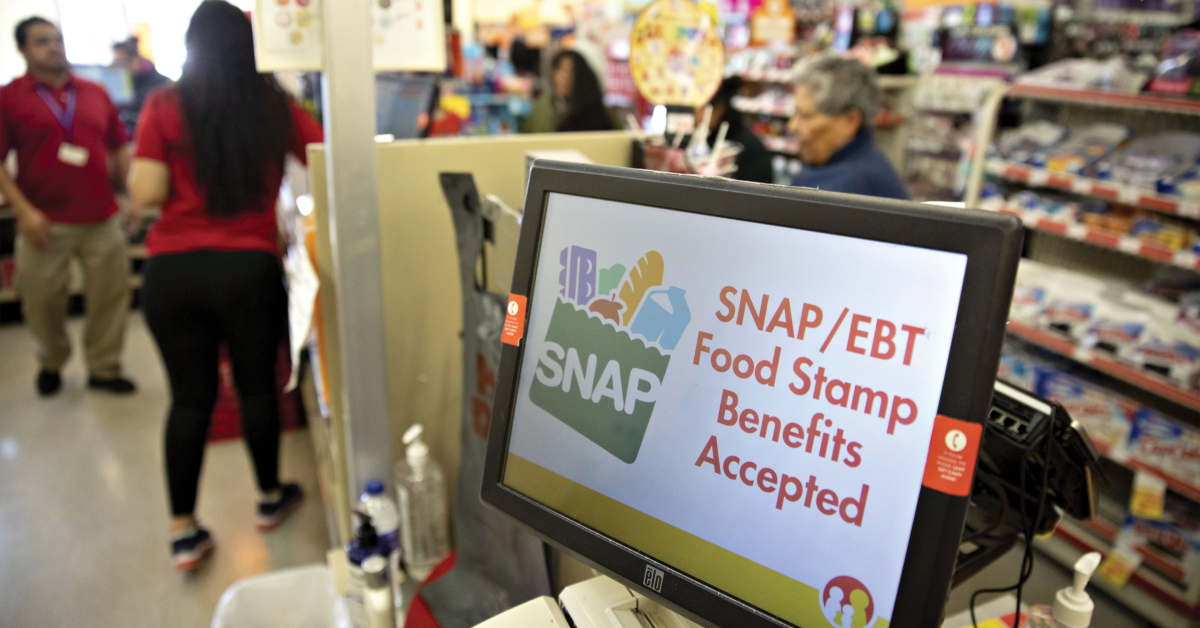
This fall, as a result of a prolonged government shutdown, food assistance benefits were reduced for millions of American households. The timing has ultimately left countless families struggling to afford groceries as Thanksgiving quickly approaches, shifting what should be a season of gratitude into one of increasing financial anxieties.
Since 1964, Supplemental Nutrition Assistance Programs—commonly known as SNAP—provide vital food resources to those who would otherwise struggle to afford grocery bills. SNAP provides eligible low-income Americans with monthly funds on a debit-like Electronic Benefit Transfer card to buy food, serving as the nation’s largest anti-hunger program. Since its inception, recipient participation has grown exponentially; in 2025—prior to funding cuts—nearly 42 million people relied on SNAP benefits monthly. That’s one in eight Americans.
The reduction in SNAP benefits is a direct result of the government shutdown that started on October 1st, which occurred as a result of disagreements among Congress; in this case, Republicans insisted significant spending reductions and controversial “policy riders”—unrelated legislative provisions—in exchange for funding, while democrats argued the Republican demands were extreme and politically motivated, instead pushing for a “clean” bill to keep government open. Each fiscal year, bipartisan Congress members work together to outline and instate a national budget, allocating funds by category to varying national programs and financial needs. When lawmakers fail to pass one or more of the twelve annual appropriation bills by the deadline of September 30th, all funding is temporarily cut and government operations are suspended. Since 1980, 15 government shutdowns have taken place. However, as of November, this year’s occurrence holds the title as the longest shutdown to date.
Apart from simply food aid, the suspension of governmental funds has led to all other “non-essential” programs being cut including the Women, Infants, and Children program; Head Start preschool programs; and Centers for Disease Control research programs. Those that are considered “essential” such as Medicare/Medicaid, Social Security, military operations, and law enforcement—including Immigration and Customs Enforcement—remain in operation, although workers are not being paid.
The impacts of these drastic cuts are felt around the nation. Food banks have faced rising demand as impacted families scramble to fill the gaps left by decreased governmental support. On a larger scale, prolonged instability can lead to detrimental effects on the national economy. Oxford Economics analysts found that each week of the shutdown could shave 0.1–0.2% off real GDP growth. If this recess continues for the remainder of the year, that number could reach 1.2–2%. Ultimately, a decrease in GDP growth can exacerbate existing issues such as a widened income inequality and threats of severe inflation.
As negotiations continue on Capitol Hill, it is still unclear when the government will re-open. But, while congress members debate budget priorities, millions of Americans await the return of social programs they desperately depend upon. The longer this monumental stall drags on, the clearer it becomes that budgeting discourse is not just a political inconvenience, but instead a direct disturbance to daily life for families across the nation.
This article also appears in our November 2025 print edition.


